


It’s all a game!
Henry Jennings | Marcus Today
When I started in the stock market, all those years ago, price discovery and the volatility of stocks were glacial, to say the least. In fact, price discovery was what they called 'Blue Buttons' walking around the London Stock Exchange floor and asking the 'Jobbers' (who were the traders of the underlying stocks on their 'pitches') what the price was for BP, Shell or ICI.
I was one of those 'Blue Buttons', and you had to do two years of hard slog and shoe leather before you were allowed to actually deal and trade with the 'Stock Jobbers'. Price moves were slow, and information was slow to come to market. In fact, in one corner of the Stock Exchange, there was a big board which had the telex news reports from overseas markets and news items that could be market-affecting, and sometimes just plain news items.
Now, fast forward nearly fifty years, and the world has changed dramatically. The stock market has just become another app on your phone, another market to trade, not something that only the rich and 'landed gentry' were allowed to invest in. The democratisation of the stock market has been extraordinary. And it is not just the stock market; now we have crypto and polymarkets to play in! The rise of the machine has been extraordinary, and now the trading apps and the access to information, AI investment tools, and the like have created an environment where the stock market has become almost a game. I noted the move recently from GameStop, the original meme trading stock, to try to buy eBay! I thought GameStop was virtually bust!
Here in Australia, we are used to playing games. Australians are already the world's biggest per-capita gamblers, and the crossover with trading app design is a natural and uncomfortable parallel.
I always find it interesting to hear from long-term conservative investors who have this hot tip or some small company that even I have not heard of that is about to have a company making project and is poised to be a ten-bagger!
It seems even the most conservative like a punt now and then.
Some facts about trading on the ASX
• The median ASX retail trade is about A$5,500, with the average on-exchange investor executing 12 trades per year, almost exclusively via low-cost online brokers. The median retail portfolio is now A$170,000, and multiplying that by 7.7 million on-exchange investors puts retail capital at roughly A$1.3 trillion in listed assets, around half the value of the entire ASX.
- The average Australian investor is now 47 years old, 58% male and 42% female. Younger investors under 25, who once invested $3 in Australian shares for every $1 in international shares, have now shifted to a 1:1 ratio. They're going global — which has implications for the ASX's long-term health.
- Gen Z increasingly gravitates toward high-risk, technology-enabled investments such as cryptocurrencies, digital assets, and mobile trading platforms, with challenges including low financial literacy, impulsive consumption, and heavy dependence on digital content remaining prevalent.
- Buy the dip is a well-entrenched investment strategy now. Brokerage and JPMorgan flow data show retail accounts added A$4.1 billion in net equity purchases on the single busiest "buy the dip" day. 12 trades a year average sounds modest, but the spike behaviour on down days is textbook variable-reward-schedule psychology, which is precisely what poker machines use.
We are used to playing the poker machines. They are designed to give you a dopamine hit and keep you engaged and keep you betting, with ultimately the only winner being the house. It has been shown in many studies that trading to excess leads to sub-optimal returns. However, the whole system has been set up to encourage you to trade. From the colours of the applications to the constant news flow, the alerts that spring to your phone telling you to do something, everything is encouraging you to trade. With this trade comes increased volatility. That volatility may not manifest in the actual underlying index per se, but certainly at a stock level, it has become extraordinary.
Last August, we had what I considered one of the most volatile reporting seasons ever, and I was staggered to see we actually outdid ourselves in the February reporting season and then in the subsequent slaughtering of some of the famed blue-chip stocks as the year wore on. We have seen the likes of COH drop 30-40% in a day. We have seen the massive underperformance of retail investor favourite CSL. We have seen WOW drop 9% in a day, and 10% moves plus or minus are now not uncommon on the back of results. And it is not just results. Earnings guidance, even the mere mention of a word in some sort of update, can be enough to spark the computer trading systems into life, stop-losses to cascade lower, and stocks to appear to be in free fall.
There are many factors at play here in terms of this volatility, some of which include:
- The rise of passive investment strategies
- The rise of High Frequency Trading (HFT) strategies -- Legalised Scalping!
- The rise of Hedge Fund Platform strategies. Highly leveraged and aggressive.
The weight of money in passive strategies is arguably the largest factor driving the increase in single-stock volatility.
Then there is High Frequency Trading as "legalised scalping".
There are also Hedge Fund platforms, sometimes called ‘Pod Shops’, where leverage is used extensively to turbo-charge returns. They have tight stops and are not afraid to aggressively short stocks and push prices around to trigger pain for other hedge funds.
One long-time market commentator, now at Regal, Charlie Aitken, says:
"Public equity market structure has structurally changed, and the unintended consequence is permanently higher single-stock volatility."
Now we can bemoan that fact, and lust after the ‘good ol days’, or we can embrace and use this volatility to ensure we take advantage of the opportunities it presents. We could run away and just trade ETFs instead, and many will do that. But ultimately, without the underlying shares and that trade, how do ETFs function? They are a derivative of the stocks. No stocks, no ETFs.
What is also extraordinary is the adoption of AI-driven research and investment strategies. I was at the ASA conference in Melbourne recently, and the presenter asked how many people in a room of about 120 investors were using AI as part of their investment process. I have to say, given the demographics of the ASA, I was somewhat surprised and shocked to see that two-thirds of the room were using AI in their research process. Some of the results need to be double checked, but it is going to put a lot of broking analysts out of business.
Then there is the trading aspect of AI
I recently read a Bloomberg article which had looked in depth at many of the AI programmes that are advertised on social media as the answer to your trading problems. I am sure you have all seen them, where they advertise that all you have to do is set up the programme and let it run, and it turns $20 into a million dollars in the space of about two weeks. Needless to say, these are mostly scams. All complete and utter codswallop.
Let's face it: if someone really had the answer to turning a few thousand dollars into millions of dollars with an AI trading programme, do you think they would really be selling it to you for $9.99 a month or showing you the promised land? Of course not. They would be keeping it to themselves, and rightly so. Why would you share the magic sauce, the secret herbs and spices behind your AI model, with anybody with a Facebook account? It makes no sense.
ETFs v STOCK PICKING
We have also seen the rise, in the last few years, or perhaps the last decade, of the ETF market, which is extraordinary. There are now around 460-odd ETFs on the Australian Stock Exchange and CBOE. They have morphed from what was once a simple product allowing you access to international markets that were hard to access through normal share trading, with all the convoluted compliance and form-filling. These ETFs have now bypassed all of that. What started as simply the ability to invest in US technology stocks through the Nasdaq, or through a FANG ETF or an S&P 500 ETF, has morphed into fund managers with black-box multi-asset strategies, leverage, gearing, and all sorts of bells and whistles that are now listed on the exchange and easily tradable. They are not always transparent, and many have jumped on the ETF bandwagon with various types of products. ETFs come in two broad types: the passive ones and the active ones. The active ones are more like the black boxes, or fund managers repackaged into an ETF listed on the exchange rather than a managed fund with unit prices published on a website and redemption forms to fill in.
The market is all about ease of access and the ability to transact any time, 24/7, in any market. True democratisation of the stock market, but it does have its problems, and that volatility we spoke about earlier is one of those issues, which turns a lot of retail investors off individual stocks. It is very hard to gird your loins and stick to your investment strategy when one of your favourite blue chips, such as Cochlear (COH), gets smacked 35% in one day on an earnings downgrade. Whether that is justified or not, it is still not a particularly great advert for individual stock selection. I am still a believer in stock picking. Maybe I am a dinosaur.

Now, do not get me wrong -- I am also a believer that ETFs can bring access and diversity to any portfolio, but there are some things to bear in mind when you look at ETFs. The most important thing is to make sure that you understand the holdings of the ETF rather than just the thematic or the marketing and catchy name or code. It is always good to see what the components are and how large a percentage of the ETF is in each of the stocks. Sometimes you will find that an ETF that gives you exposure to a massive number of stocks, say 1,500 of the world's biggest, is actually highly concentrated in just 10 US tech stocks.
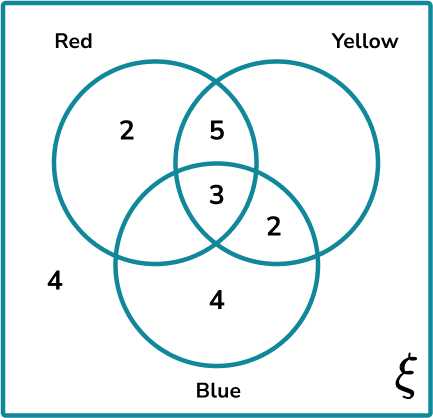
One thing worth keeping in mind is the ‘overlap’. When I was at school, we used to create Venn diagrams, whereby you could see the common factors at play and identify where your concentration was. The same should be taken into account when building a portfolio solely from ETFs. It is a great idea to actually draw a Venn diagram and ensure that any concentration risk is the concentration risk you want, rather than the concentration risk you have drifted into.
One way of doing this in our new AI world would be to ask your friendly AI model, whether ChatGPT, Claude or many of the others, to analyse your exposure across a broad range of ETFs and point out any concentrated risk. It may be that you are heavily exposed to NVIDIA or one of the other tech stocks, which can be fine and very lucrative, but you need to ensure that is the exposure you actually want, as opposed to the exposure you seem to have drifted into because of clever marketing around one particular theme or investment strategy.
Volatility is here to stay. It is the new gamification of investing. AI is bringing a whole new level to that gamification, and the speed at which it can analyse a stock or a sector is breathtaking. You have to make friends with volatility and treat it as an opportunity. It is a giant poker machine, perhaps? The more you play, the more likely the house is to take your money, but if you time things correctly, assess the risk and keep your head, you can beat the house.
AI is taking the democratisation of investing to a whole new plain. But does it just throw up the same answer? Does it really question the thesis? Or does it just become generic slop?
We shall find out in time, but the game is afoot. Learn the rules and stick to your plan. Try to ignore the noise and make friends with volatility. Timing the market is hard, and sometimes it is just luck. Sometimes, there are real insights and swimming against the tide can work, but momentum has become a significant factor in these markets. Follow the money. They say in ice hockey, follow the puck! Plenty of that is happening. Just make sure you don’t become the puck and get smashed around in the process.
I will remain a stock picker at heart. Many have embraced ETFs solely but I remain convinced that real money can be made in stock selection. The experts will tell you it is all about asset allocation rather than stock selection. Maybe. But stock picking is my thing. Always has been, always will be! It is all a game after all!
A free trial of the Marcus Today newsletter for nabtrade clients is available here.
All prices and analysis at 5 May 2026. This information has been prepared by Marcus Today Pty Limited. Marcus Today Pty Ltd ABN 57 110 971 689 is a Corporate Authorised Representative (no. 310093) of AdviceNet Pty Ltd ABN 35 122 720 512 (AFSL 308200). The content is distributed by WealthHub Securities Limited (WSL) (ABN 83 089 718 249)(AFSL No. 230704). WSL is a Market Participant under the ASIC Market Integrity Rules and a wholly owned subsidiary of National Australia Bank Limited (ABN 12 004 044 937)(AFSL No. 230686) (NAB). NAB doesn’t guarantee its subsidiaries’ obligations or performance, or the products or services its subsidiaries offer. This material is intended to provide general advice only. It has been prepared without having regard to or taking into account any particular investor’s objectives, financial situation and/or needs. All investors should therefore consider the appropriateness of the advice, in light of their own objectives, financial situation and/or needs, before acting on the advice. Past performance is not a reliable indicator of future performance. Any comments, suggestions or views presented do not reflect the views of WSL and/or NAB. Subject to any terms implied by law and which cannot be excluded, neither WSL nor NAB shall be liable for any errors, omissions, defects or misrepresentations in the information or general advice including any third party sourced data (including by reasons of negligence, negligent misstatement or otherwise) or for any loss or damage (whether direct or indirect) suffered by persons who use or rely on the general advice or information. If any law prohibits the exclusion of such liability, WSL and NAB limit its liability to the re-supply of the information, provided that such limitation is permitted by law and is fair and reasonable. For more information, please click here.