


Sometimes the hardest thing to do… is to do nothing
Henry Jennings | Marcus Today
It is fair to say, but it is not an easy task to write anything strategic, let alone stock-specific, at the moment, while the world is watching what is happening in Iran. Here in Australia, we have seen a big, short-covering rally after Easter. I suspect no one wants to be short if we do get some peace or ceasefire in the Middle East. However, there are several things to keep an eye on; the most important thing remains the oil price. This is at the heart of the issue: if oil prices remain elevated, how will that affect the global economy?
It is obviously going to be inflationary, especially here in Australia, where we use more diesel per capita than anywhere else in the world and thus have a great reliance on that fuel price. We have failed miserably in weaning ourselves off the dependency on diesel, whether that is from mining operations, trucking machinery, food delivery or even cars, we are still highly dependent on the diesel price. And as we have seen, the spread between the various grades and products that come out of a barrel of oil has been massively exaggerated. For instance, jet fuel in the US has doubled, and airlines are under significant pressure on pricing.
On the surface, the US economy is still going swimmingly. There has been no huge jump in inflation, and so far, there has been no jump in unemployment and ostensibly, the data coming out of the US on manufacturing, etc., has been positive. We are, however, heading into the US reporting season, and this will be telling as to what the companies are actually seeing on the ground and how it is affecting their business. Not only what is happening at present, but more importantly, how they're seeing the future laid out with their outlook statements. Caution may be the common denominator.
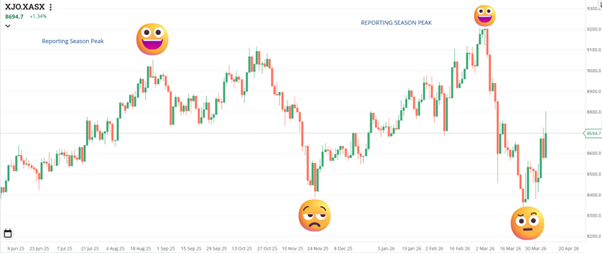
Here we have the May budget to look forward to, and an economy that is starting to feel the pressure of higher interest rates, higher mortgage rates and much higher fuel prices, even though the government has cut some of the excise taxes on those fuel prices, but with oil around $110 a barrel, family budgets are being spread a little thin. Yet the ASX-200 is trading only now 5% below its all-time high, which, when you consider we've had an interest rate rise and a massive increase in the cost of petrol and diesel, seems like we have discounted much of the war. We may have drifted into complacency and an optimistic view that this war is going to finish soon.
Source: Marcus Today
It is fair to say that portfolios have been stress tested during this time, and some of the trades that have worked in previous conflicts have not borne fruit this time. One of those trades has been the gold price, which has been sold down on the back of this conflict. Some of this can be attributed to the sovereign nations selling off their gold reserves in order to pay for defence and other social benefits. For instance, Turkey sold around 60 tonnes of gold. That is around US$8bn worth of gold. And they are not the only ones; it is also rumoured that Poland, which has built up significant reserves, is also looking to sell some of its gold reserves in order to pay for defence, as the US is looking more and more like an unreliable partner in NATO. If it stays in NATO at all.
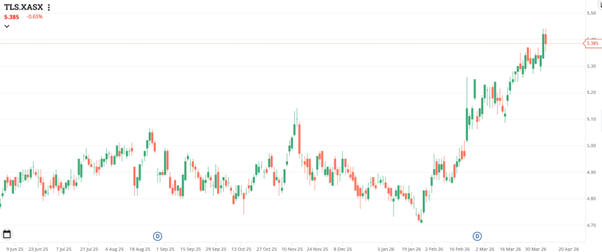
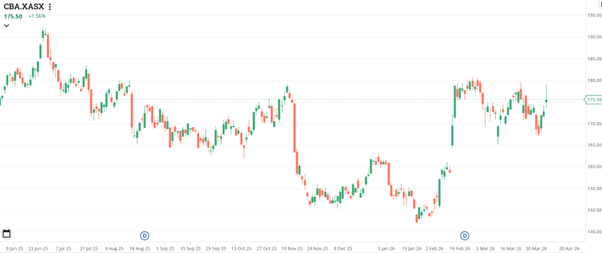
There have been some corners of the market that have held up remarkably well, the likes of the supermarkets, Telstra (TLS), for instance and the banks, which seemed to be considered immune to an economy that is weakening, where mortgage demand is slowing and where bad debts could potentially be rising.
Source: Marcus Today
Part of the positives for the banks is their tardiness to pass on interest rate rises on deposit accounts, widening the spread between what they pay on their deposits and what they charge on their mortgages. This net interest margin is probably going to widen a little and will more than compensate for any of the bad debts that increase as a result of economic stress locally.
Source: Marcus Today
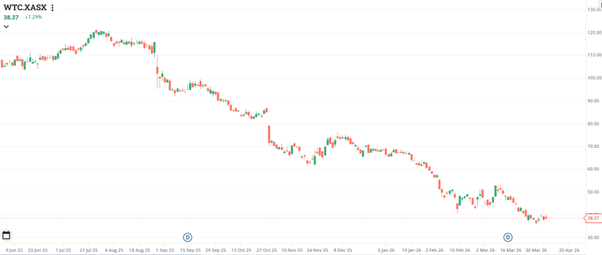
As far as portfolio construction goes, it certainly has paid to be diversified, and it certainly has paid not to be in growth or high PE stocks, as those valuations have been unwinding faster than you can say ‘discounted cash flow’. Tech stocks have been decimated. There could well be an opportunity here at some stage.
Source: Marcus Today
Part of the problem is that if you put in higher interest rates into the Excel spreadsheet, the valuation number that it spits out at the other end decreases as interest rates rise. As a result, our tech sector has been absolutely decimated with Wisetech (WTC), Xero (XRO) and Technology One (TNE) all under significant pressure and all really struggling.
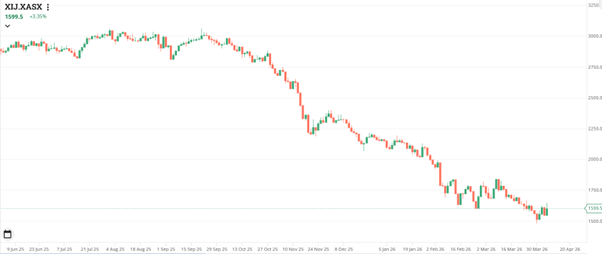
Source: Marcus Today
Where we have seen gains is in resource stocks and the banks, which have been holding things up and certainly making us look better than perhaps we should be. As I said, we're only 5% below the all-time high of 9200 that we hit during a very optimistic reporting season, which, absent the war, would have seen more optimism and a push perhaps towards 9500. Circumstances, though, have overtaken us.
The question is for our market: where does it go if we do get some sort of ceasefire or a peace agreement in the Gulf and oil tankers begin to pass through the Strait? It is hard to see an outcome that will satisfy both parties and the US. The US and Israel did not start this just to go back to a relative status quo with Iran littered with rubble and perhaps their nuclear capabilities still intact. Plus, we have seen how much pressure Iran can inflict on the region, just with some rudimentary drones and missiles. Iran is fighting for its life, its very survival, and it seems an anathema, but America has not won any ‘hearts and minds’ in Iran by their actions. Certainly, regime change does appear some way off, and again, are we just going to go back to the status quo that we had before February 28th within Iran, which can still pose significant problems, issues and even damage to Middle Eastern infrastructure? That holiday in Dubai is not looking quite so good. All those influencers who have taken up residence in Dubai may be starting to question whether they have done the right thing.
For investors, it has been a wild ride. I have frequently said, and written, ‘if in doubt, do nowt’. Sometimes the hardest thing to do is to do nothing. Sometimes the hardest thing to do is to look through the short-term noise and the fog of war, and focus on the long-term horizon, especially when that horizon is continually evolving due to a tweet or two. But given the market is now only 5% below its all-time high, panic does not seem to have been the right move, at least not yet.
In our MT 20 Strategy Fund, we have been in the enviable position of having cashed out our US and themed-focussed ETF exposure back in October. Not because we were that smart, we did not see a war coming (definitely not that smart!), but we just believed that U.S. stocks looked overvalued and decided to step back. There have been many times in the past six months or so that we have looked at the market and wondered whether we should be getting back in. Time and time again, we have asked ourselves that question, in fact, every morning, even more so when we see a U.S. market push 2 or 3% higher and ostensibly the coast being clear. Yet time and time again, we have decided to stay out and to stay in cash. That may change at any time, any day, but so far, when we have evaluated the risk-reward in the market, we have decided that the risk outweighs the potential reward.
Now we all know there is no such thing as a sure thing; every investment, every strategy comes with some sort of risk, but part of our job is to minimise the risk and maximise the reward. Unlike other funds that consider themselves conservative and cashed up with a 10% or 15% cash level, we are unique in that we have the ability to go to 100% cash. This is not something that every fund can do. With most funds, the whole point of giving your money to a fund manager is for them to invest it, if you just wanted to keep it in cash, you would put it in your bank on deposit. But this ability to be out of the market at times, does ensure that we miss some of the volatility and periods of underperformance, that others bake into their funds. We do not believe we can time it perfectly every time, but close can be good enough.
When to get back in? In the coming days and weeks, we may re-enter again. Obviously, there are some signs we are looking for. The US equity markets and the oil price will be key. If the oil price comes back below US$90, if the Strait of Hormuz reopens, and we get some sort of deal done between Trump and the Iranian administration. It may well be that we have a short covering rally across the globe, but we also have to consider that the reasons why we had not re-entered the market before the war are still valid, and there are still issues concerning valuations, the AI return on investment, private credit, interest rate rises, inflationary impacts, and a myriad of other things that are out there, most of which have become subservient to the Iranian conflict. We may miss the first glimmer of the move, but we are in for the long haul.
Just because this risk falls away does not mean that every risk falls away. There will inevitably be a rally on ‘VI’ day victory in Iran, and money will come flooding back in from where it has been hiding in things like the US dollar and treasury's, but the danger is the in the wash up we will then go back to focusing on the underlying issues which have not been solved and now could potentially be even more significant.
If we do get peace in our time, enjoy the rally, we will have to make a decision whether to join the party, but just remember, conditions before the war were still not conducive to sounding the general ‘all clear’. We continue to take every day, one decision at a time.
A free trial of the Marcus Today newsletter for nabtrade clients is available here.
All prices and analysis at 7 April 2026. This information has been prepared by Marcus Today Pty Limited. Marcus Today Pty Ltd ABN 57 110 971 689 is a Corporate Authorised Representative (no. 310093) of AdviceNet Pty Ltd ABN 35 122 720 512 (AFSL 308200). The content is distributed by WealthHub Securities Limited (WSL) (ABN 83 089 718 249)(AFSL No. 230704). WSL is a Market Participant under the ASIC Market Integrity Rules and a wholly owned subsidiary of National Australia Bank Limited (ABN 12 004 044 937)(AFSL No. 230686) (NAB). NAB doesn’t guarantee its subsidiaries’ obligations or performance, or the products or services its subsidiaries offer. This material is intended to provide general advice only. It has been prepared without having regard to or taking into account any particular investor’s objectives, financial situation and/or needs. All investors should therefore consider the appropriateness of the advice, in light of their own objectives, financial situation and/or needs, before acting on the advice. Past performance is not a reliable indicator of future performance. Any comments, suggestions or views presented do not reflect the views of WSL and/or NAB. Subject to any terms implied by law and which cannot be excluded, neither WSL nor NAB shall be liable for any errors, omissions, defects or misrepresentations in the information or general advice including any third party sourced data (including by reasons of negligence, negligent misstatement or otherwise) or for any loss or damage (whether direct or indirect) suffered by persons who use or rely on the general advice or information. If any law prohibits the exclusion of such liability, WSL and NAB limit its liability to the re-supply of the information, provided that such limitation is permitted by law and is fair and reasonable. For more information, please click here.